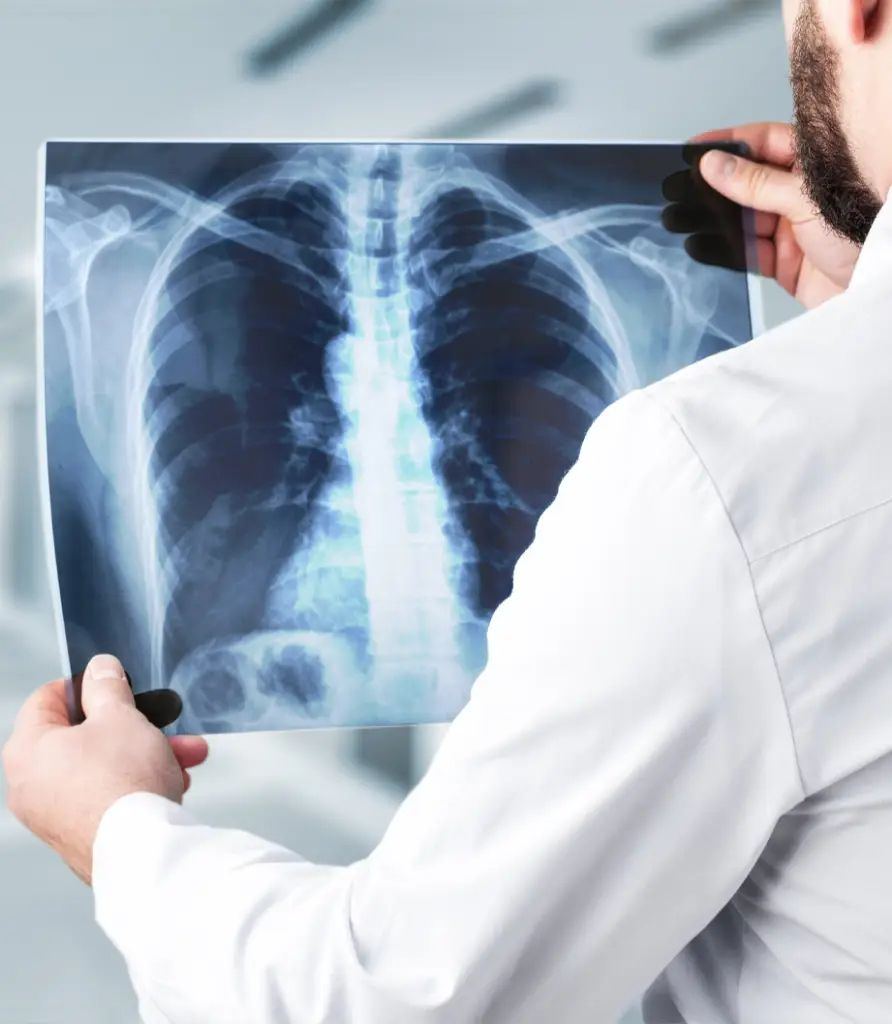

Our Radiologic Technology Program is meticulously designed to impart students with a comprehensive understanding of the principles and practical applications of this advanced imaging technology. As you navigate through the program, you will encounter our expert faculty—composed of experienced Radiologists and healthcare professionals that are devoted to nurturing the next generation of Radiologic Technicians. Our students will have the opportunity of exploring the human body while learning about the evolving field of medical imaging at the Sacramento Ultrasound Institute.
Program Hours: 2824 Hours
Program Length: 96 Weeks
Credits Awarded: 151 Quarter
Delivery Method: Blended
Credential: Associate of Applied Science Degree
This program is new and has not had enough time to publish performance rates at this time.
The students receive nine hundred sixty four (964) hours of didactic training and one thousand eight hundred sixty (1860) hours of clinical rotation, allowing them to apply the lecture topics into medical settings. The curriculum provides students with the technical, clinical, and interpersonal skills necessary to succeed in this field. Upon completion of the program, our students graduate with an associate in applied science.
Our mission is to cultivate proficient radiologic technologists who are equipped with the technical acumen, ethical grounding, and patient-centered care approach. We are committed to fostering an environment of academic excellence, continuous learning, and community engagement. Our program endeavors to empower students with the knowledge and skills necessary to excel in the dynamic field of radiologic technology, ensuring they contribute positively to the ever-evolving landscape of healthcare and make a meaningful impact in the lives of patients they serve.

Hello! I am excited to invite the new cohort of learners to develop skills and master their radiology journey. Our program is known for providing comprehensive, hands-on coaching that prepares students for success in the world of radiology. We offer both theoretical and clinical training. This learning structure allows our students to have opportunities to immerse in the latest technology, under the guidance of experienced experts. On our page, you can learn more about our faculty, courses, facilities, and how to apply to our program. We hope to be a part of your educational journey and look forward molding your medical career in radiology. -Bianca Bae
All SUI programs utilize a blended method of instruction combining online and in-person learning. This instructional model incorporates online synchronous and asynchronous coursework with in-person laboratory training and clinical externships. Schedules vary by program and by course and will continue to vary throughout the didactic and clinical phases of education.
While specific course schedules are shared with students once admitted, during the didactic portion of all programs students can generally expect instructional activities to occur between approximately 8:00 AM and 3:00 PM, Monday through Thursday.
Once students enter the clinical portion of the program, they are expected to maintain open availability. Clinical sites determine student schedules to ensure completion of required clinical hours. Students may be assigned up to 40 hours per week, including evening and weekend shifts, depending on clinical site needs.
Clinical training is an integral component of the Diagnostic Medical Sonography program. Students gain firsthand experience in real-world clinical settings under the supervision of qualified and experienced healthcare professionals. This training allows students to apply theoretical knowledge in a clinical environment, develop proficiency in operating ultrasound equipment, and strengthen skills in professional patient care. The clinical training component is essential in preparing students for successful careers in Diagnostic Medical Sonography.
Students may be required to travel up to 125 miles one way from the campus to attend assigned clinical sites. Travel time, transportation, and associated costs are the responsibility of the student.
RT Program Admission Requirements
The Radiologic Technology program does not require any prerequisite courses or post-secondary education. The only education verification required is proof of high school completion and the General Admissions requirements listed below. However, completed post-secondary coursework may be submitted during an open application window and evaluated for transfer credit if an applicant is admitted to the program. For details on transfer credit requirements, please visit our Transfer Credit Guide.
General Admissions Requirements
Please Note:
To determine if your course meets our transfer credit requirements, please click here to review our Transfer Credit Guidelines. For program start dates and application windows, visit our Admissions page. To begin your application process, you can watch a recorded webinar or register for a live info session.
Financial aid is available for those who qualify. Click here for more information about Financial Assistance. For details please call: 916-877-7977.

Sacramento Ultrasound Institute is institutionally accredited by the Accrediting Bureau of Health Education Schools (ABHES). ABHES is recognized by the U.S. Department of Education as a nationally recognized accrediting agency and is also recognized by the American Registry of Radiologic Technologists (ARRT). This recognition means that graduates from SUI’s Magnetic Resonance Imaging (MRI) program, offered under ABHES institutional accreditation, are eligible to apply for ARRT certification and registration—a key credential for MRI technologists nationwide.

Upon successful completion of the Radiologic Technology program, graduates become eligible to sit for the American Registry of Radiologic Technologists (ARRT) certification exam for Radiologic Technology. Achieving this certification is crucial for enhancing employment prospects and professional recognition within the field.
According to the U.S. Bureau of Labor Statistics (BLS):
The median annual wage for radiologic technologists and technicians was $77,660 in May 2024. Bureau of Labor Statistics
Employment for radiologic and MRI technologists is projected to grow 5 percent from 2024 to 2034, which is faster than the average for all occupations. Bureau of Labor Statistics
About 15,400 job openings per year, on average, are expected over the decade. Many of those are due to the need to replace workers who retire or leave the field. Bureau of Labor Statistics
At Sacramento Ultrasound Institute (SUI), our Radiologic Technology training is designed to prepare students for this stable and growing demand. We emphasize hands-on clinical experience, professional networking, and job-readiness so graduates can compete effectively in the job market.
For full details and data, visit the BLS “Radiologic and MRI Technologists” page
Sacramento Ultrasound Institute is dedicated to supporting students’ career aspirations. Our career services team provides personalized guidance to each student. They assist them with job searches, resume preparation, interview skills, and networking. SUI maintains a strong network of affiliations with medical facilities and organizations, offering students valuable opportunities for internships and potential employment after graduation.